Why Is the Plastic Molding Process Important?

The plastic molding process is important because it turns raw polymer into consistent, usable products. It supports medical devices, automotive components, packaging, electronics, and household goods. A molded part may look simple, yet its performance depends on many controlled details. Material temperature, injection speed, cooling time, mold pressure, and cavity design all affect the final result.

Small errors matter. A slight temperature change can create warping, sink marks, or weak weld lines. Poor cooling may leave a part looking acceptable but failing under stress. John Bozzelli, founder of RJG and a respected injection molding educator, offers a useful warning: “You cannot inspect quality into a part.” Quality must be designed and controlled during production. That principle reflects practical industry experience, not just theory.

The process also improves repeatability. Properly designed molds reduce waste, shorten cycle times, and maintain accurate dimensions across thousands of parts. They can create thin walls, complex shapes, and detailed textures with limited finishing work. Still, no plastic molding process is perfect. Even experienced teams may overlook material moisture, mold wear, or unexpected flow behavior. That deserves attention.

Reliable results require testing, measurement, and honest review. Engineers often study filling patterns, cooling performance, and dimensional data before approving production. Operators then monitor pressure, temperature, and cycle stability. These steps protect product safety and manufacturing efficiency. More importantly, they connect design decisions with real-world performance. Understanding this process explains why molding remains central to modern product manufacturing.
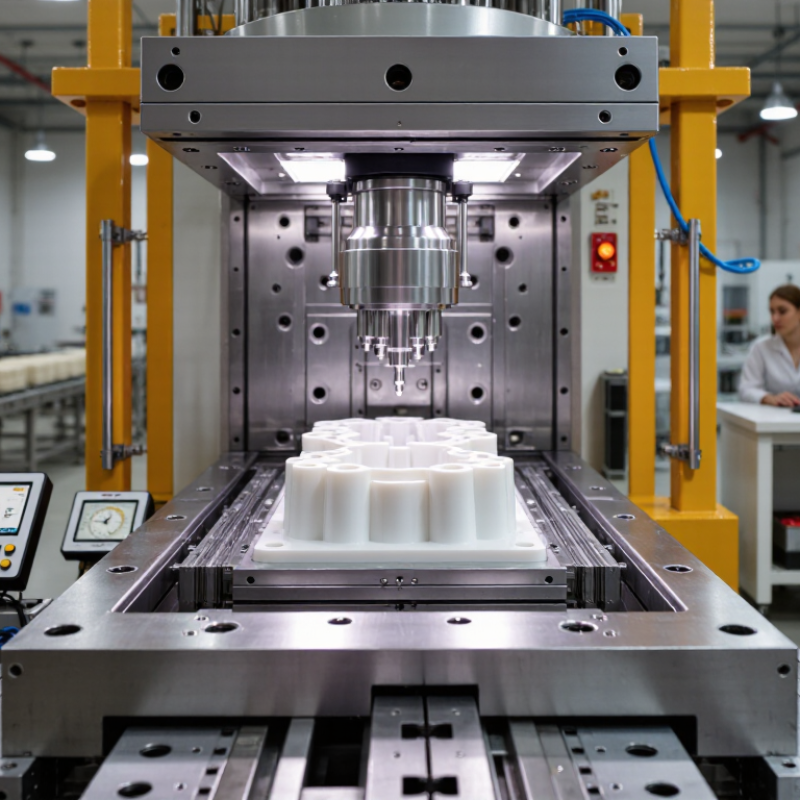
Why Is the Plastic Molding Process Important?

Defining Plastic Molding: Serving a 400+ Million-Tonne Global Industry

Why Is the Plastic Molding Process Important?

Plastic molding gives shape to a global industry producing more than 400 million tonnes of plastic each year. It converts measured resin into useful parts, from medical housings to irrigation fittings. The main methods include injection, blow, compression, and rotational molding. Each method suits different shapes, volumes, and material behaviors.

In practical production, molding affects much more than appearance. Temperature, pressure, cooling time, and mold design control strength and dimensional accuracy. A small setting error can create warping, sink marks, or weak weld lines. Good process control improves repeatability and limits material waste. Still, no molding cycle is perfect. Even experienced teams must question old settings, inspect samples, and adjust for moisture, shrinkage, or seasonal temperature changes.

Tips: Start with the part’s function, not only its shape. Choose a resin with documented performance data. Check wall thickness before designing the mold. Keep cooling channels balanced. Record every process change. Short trials reveal hidden problems. Recycled content can reduce impact, but it may change flow and strength. Test it carefully before full production.

Mapping the Process: Melt, Shape, Cool, Eject, and Inspect

Plastic molding matters because each stage controls the next. In production, I have seen a small moisture problem become a cloudy surface. The cycle begins with the melt. Pellets are heated until the polymer flows evenly through the barrel and nozzle. Temperature must match the material, not a convenient machine setting. Too much heat can damage the polymer. Too little heat can leave weak weld lines.

During shaping, pressure fills the cavity and records every design decision. Thin ribs, sharp corners, and long flow paths need careful process planning. The mold then cools the part through controlled channels. Cooling is not passive. Uneven cooling may cause sink marks, warpage, or internal stress. I sometimes see teams shorten this stage to save seconds. That choice can create larger losses later. The part may look acceptable at ejection, yet change shape overnight.

Ejection should release the component without whitening, scratches, or distortion. Balanced ejector force protects both the part and the mold. Inspection turns the cycle into evidence. Operators check dimensions, weight, appearance, and fit against approved specifications. Sampling alone may miss a defect that appears after several cycles. Simple records help connect defects with temperature, pressure, cooling time, and maintenance. No process is perfect. A reliable molding operation keeps testing assumptions, not just parts.

Comparing Injection, Blow, Compression, and Rotational Molding

Plastic molding determines how efficiently a product is made, used, and eventually recovered. PlasticsEurope’s Plastics—The Fast Facts 2024 reports global plastic production reached 413.8 million tonnes in 2023. That scale makes process selection more than a factory decision.

Injection molding suits detailed parts, tight tolerances, and repeated high-volume production. It can create clips, housings, and medical components with consistent dimensions.

Blow molding forms lightweight hollow products, such as bottles and tanks. Its air pressure stretches heated plastic against a mold wall.

Compression molding applies heat and pressure to thermosets, rubber, and composite materials. It often handles thick sections well.

Rotational molding slowly heats powder inside a rotating mold. This method produces large hollow parts with relatively low tooling costs. Wall thickness can vary, though. That weakness is easy to underestimate.

Tips: Match the process to the part, not only the annual quantity. Check wall thickness, cooling time, scrap, and mold maintenance during trials. A simple cut section can reveal hidden voids or uneven walls. The U.S. Environmental Protection Agency reports that containers and packaging represented 14.5% of municipal solid waste generation in 2018. Design choices therefore influence material use and end-of-life handling. My practical view is imperfect: injection molding may appear cheapest per unit, but tooling, defects, and material waste can change the calculation. A spreadsheet alone rarely catches every production problem.

Explaining Its Importance: Precision, Scale, Speed, and Cost Control

Why Is the Plastic Molding Process Important?

Plastic molding matters because it turns a design file into repeatable physical parts. Precision begins inside the mold cavity, where wall thickness, draft angles, and cooling channels affect every result. A small design error can cause warping, sink marks, or difficult ejection. Engineers therefore review tolerances against the selected material and machine settings. Perfect accuracy is not always realistic. Practical accuracy is.

Scale changes the production challenge. A mold that produces one sample may support thousands of parts with consistent cycle times. Automated feeding and controlled cooling can improve speed without sacrificing essential quality. However, faster cycles can create defects when cooling time is reduced too aggressively. Careful testing remains necessary. Cost control depends on more than the mold price. Material waste, maintenance, labor, rejects, and energy use all influence the final unit cost.

Tips: Test critical features before full-scale production. Measure parts from different mold cavities and production runs. Keep records of temperature, pressure, cooling time, and defect rates. Use clear inspection standards, but review them when real operating conditions change. A cheaper mold may become expensive after repeated repairs. Conversely, an advanced design may offer little value for a simple, low-volume part. The best decision usually balances precision, scale, speed, and total ownership cost.

Why Is the Plastic Molding Process Important? - Explaining Its Importance: Precision, Scale, Speed, and Cost Control

The following representative industry ranges show how common plastic molding processes compare across dimensional precision, production scale, speed, material efficiency, and cost control.

Molding Process Typical Dimensional Capability Typical Cycle or Line Speed Practical Production Scale Typical Tooling Cost Range Material Efficiency Best Cost-Control Advantage
Injection Molding Approximately ±0.05–0.25 mm for many molded dimensions, depending on material, part size, and tool design. About 10–60 seconds per cycle; multi-cavity tools can produce several parts per cycle. Medium to very high volumes, commonly from 10,000 to several million parts annually. Approximately US$5,000–US$150,000 or more for complex, high-cavity tooling. High; runners and sprues may be reground when material specifications allow. Low unit cost at high volume through automation, multi-cavity tooling, and repeatable cycle control.
Blow Molding Approximately ±0.20–0.60 mm for many container dimensions; wall-thickness variation is a key control factor. About 10–40 seconds per container, depending on size, resin, and equipment configuration. Medium to very high volumes, especially for hollow containers and tanks. Approximately US$3,000–US$50,000, with larger or more complex molds costing more. High for hollow products; excess parison material can often be recovered where permitted. Efficient production of lightweight hollow parts with relatively low material use per container.
Extrusion Typically ±0.10–0.50 mm for profile dimensions, depending on geometry, cooling, and calibration. Continuous operation, commonly about 1–100 meters per minute depending on product type. High and continuous production; suitable for long lengths, sheet, film, pipe, and profiles. Approximately US$2,000–US$30,000 for dies and calibration tooling. Very high for uniform profiles; scrap can often be reduced through stable process control. Low cost per meter or kilogram because the process runs continuously with limited labor input.
Thermoforming Approximately ±0.30–1.00 mm; wall-thickness distribution and part depth influence accuracy. About 10–60 seconds per forming cycle, depending on sheet thickness and part size. Low to high volumes, commonly from several hundred to hundreds of thousands of parts. Approximately US$1,000–US$30,000 for forming tools; aluminum tools generally cost more than composite tools. Moderate to high; trim scrap may be recycled when resin and contamination controls permit. Lower tooling investment and shorter development time than many high-pressure molding options.
Rotational Molding Approximately ±0.50–2.00 mm for many dimensions; shrinkage and wall-thickness variation require careful design. About 15–60 minutes per cycle, including heating, cooling, and loading operations. Low to medium volumes, generally suited to large, hollow, or unusually shaped parts. Approximately US$3,000–US$50,000, depending on mold size, material, and complexity. High; the process normally uses a measured resin charge with little runner waste. Cost-effective for large hollow parts because molds are comparatively simple and pressure-free.

Interpretation: Precision is important when parts must fit, seal, or assemble consistently. Scale and speed determine whether a process can meet demand. Tooling design, cycle time, automation, material utilization, and scrap reduction are the main levers for controlling total cost. The ranges above are indicative industry values rather than guaranteed specifications; actual results vary with resin grade, part geometry, mold design, machine capability, tolerances, and quality requirements.

Evaluating Sustainability: Only 9% of Plastic Waste Is Recycled (OECD)

Why Is the Plastic Molding Process Important?

Plastic molding matters because it controls material use before waste appears. The OECD’s Global Plastics Outlook reports that only 9% of plastic waste was recycled in 2019. Around 22% was mismanaged, while nearly half entered landfills. These figures make production decisions important. A poorly designed mold can create flash, short shots, and rejected parts. Each defect consumes energy, resin, and labor without creating useful value. Better tooling and stable temperature control can support near-net-shape production and reduce avoidable scrap.

Recycling alone is not enough. The OECD also reported that global plastic waste more than doubled between 2000 and 2019. UNEP estimates that roughly 430 million tonnes of plastic are produced annually, with many products designed for short use. Recycled resin can lower demand for virgin material, but its quality may vary. That creates a practical tension between sustainability, appearance, strength, and product life. I have seen small process changes reduce waste, yet not every factory records losses consistently. The data is useful, but imperfect.

Tips: Design parts with fewer materials and easier separation. Use process monitoring to detect defects early. Reclaim clean production scrap where performance allows. Measure energy, resin loss, rejected parts, and recycled content separately. Do not treat recycled content as the only sustainability measure. Product durability and end-of-life planning matter too.

Why Is the Plastic Molding Process Important?

Global plastic waste treatment in 2019, highlighting the sustainability challenge behind plastic production and molding.

According to the OECD, only 9% of global plastic waste was recycled in 2019. The remaining waste was incinerated, placed in landfills, or mismanaged, emphasizing the importance of designing durable products, reducing material waste, and improving recyclability in plastic molding.