Choosing an injection molding machine manufacturer is rarely a simple price comparison. Production volume, material choice, cycle time, and local service can change which supplier makes sense. A machine that performs well in a high-volume packaging plant may not suit a small precision-molding workshop. Details matter.
This overview introduces ten manufacturers with a significant presence in the global market, including companies such as ENGEL, Haitian, ARBURG, and Sumitomo (SHI) Demag. It considers more than brand recognition. Machine range, automation options, energy efficiency, technical support, and experience across applications all help shape the comparison. These factors can affect daily production, from mold changes to troubleshooting an inconsistent cycle.
The list should be read as a practical starting point, not a definitive ranking. Manufacturers differ in regional availability, product configuration, and service coverage, so a strong reputation alone cannot guarantee a good fit. Even published specifications may not tell the whole story. Buyers should verify current models, operating requirements, and support arrangements directly with suppliers. A careful assessment can narrow the field, though no overview replaces a plant-specific evaluation.
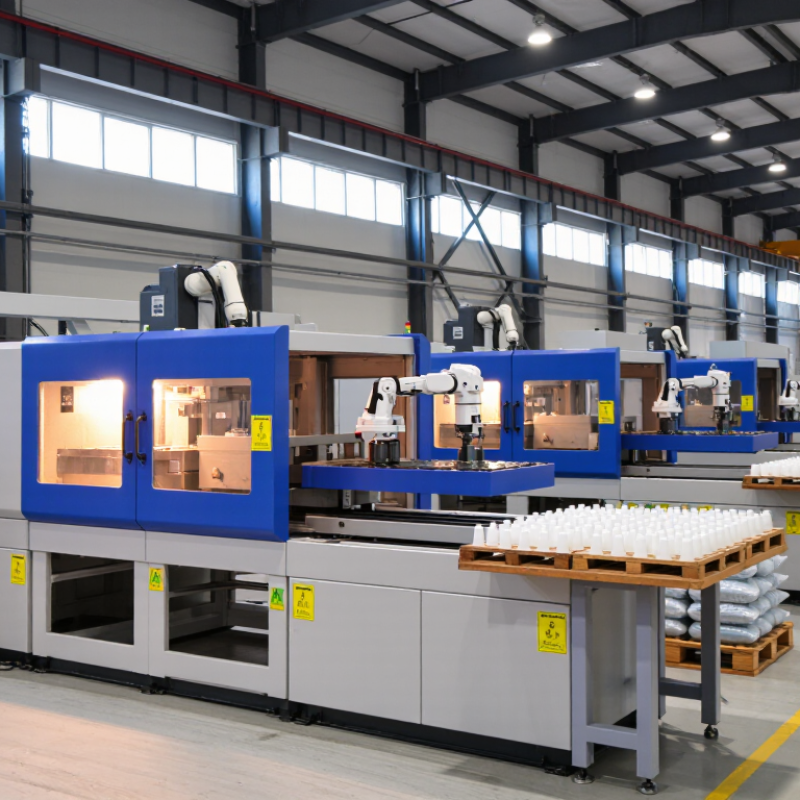
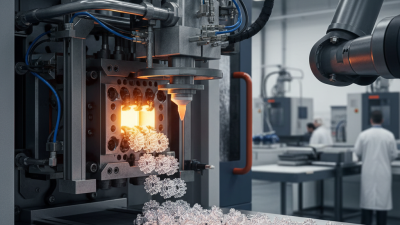
An injection molding machine turns plastic pellets into repeatable parts through heat, pressure, and a shaped mold. Pellets enter a heated barrel, where a rotating screw melts and mixes them. The screw then pushes the melt through a nozzle into a closed mold. Pressure holds the material in place as it cools. Then the mold opens. Ejector pins release the part, and the cycle begins again. Small changes in temperature, pressure, or cooling time can affect dimensions and surface finish.
The method suits high-volume production because one mold can make many similar parts. Common uses include food containers, appliance housings, automotive clips, electrical connectors, and medical components. PlasticsEurope’s Plastics – the Fast Facts 2024 report estimates global plastics production at 413.8 million tonnes in 2023, illustrating the scale of the material supply behind these applications. Fortune Business Insights estimated the injection molding machine market at about US$10.7 billion in 2023 in its 2024 market report. These figures describe different parts of the industry, not machine output alone.
Tooling can be costly, so the process is often less practical for very short runs. Scrap, energy use, and cooling time also matter. A perfect-looking part can still hide stress or uneven wall thickness. Operators must test the process, not just trust the machine settings.
A credible top-ten list should measure performance, not publicity. Grand View Research valued the global injection molding machine market at about US$10.7 billion in 2023, reflecting a broad and varied industry. The estimate gives useful context, but market size alone cannot identify the strongest manufacturers. Numbers need context.
Compare machine specifications under equivalent conditions. Assess clamping force, injection speed, shot-size range, and repeatability with the same test material and mold. Ask for cycle-time data and scrap rates from production runs, not just demonstrations. Check energy use per kilogram of molded product; a low purchase price may hide higher operating costs. Grand View Research projected 4.5% annual market growth from 2024 to 2030, but growth is not proof of engineering quality.
Service matters on the factory floor. Evaluate spare-parts availability, technician response times, training, and remote diagnostics across the regions served. Review documented uptime and the machine’s ability to process the materials and part sizes a buyer actually needs. PlasticsEurope’s Plastics—The Fast Facts 2024 reports 413.8 million tonnes of global plastics production in 2023, underscoring the scale and diversity of processing needs. That matters. Independent test records and clear warranty terms strengthen a comparison, though rankings still involve judgment: public data is uneven, and no single score captures every plant’s priorities.
The ten manufacturer profiles reflect different strengths in injection molding. One focuses on compact machines for small, precise parts. Another serves high-volume packaging lines, where fast cycles matter. A third emphasizes all-electric models and repeatable control. One is known for large-clamping-force equipment for bulky components. Another builds flexible systems for frequent mold changes.
A sixth profile centers on hydraulic machines valued for robust performance. A seventh combines machine supply with automation support. An eighth specializes in multi-component molding. A ninth offers broad machine ranges for varied production needs. The tenth emphasizes service access and practical operator training. These descriptions are broad, not a substitute for checking a specific supplier’s current specifications. Rankings also shift with region, application, and evaluation criteria.
Tips: Match clamping force, shot size, and platen dimensions to your mold. Ask for cycle-time evidence using a part similar to yours. Check local service coverage and spare-part lead times. Fit matters. Review energy use alongside purchase cost; I would not assume the lowest quoted price is the best value.
Comparing the leading ten injection molding machine manufacturers means looking beyond clamping force. Their technologies range from hydraulic systems, valued for high force and established processes, to all-electric machines with precise, repeatable movements. Hybrid designs combine hydraulic power with electric control. Each suits different production needs; no type wins every comparison.
Grand View Research valued the global injection molding machine market at USD 10.4 billion in 2023. Its market analysis points to demand across packaging, automotive, and consumer goods. Packaging lines often prioritize fast cycles, while automotive parts may require larger clamps and careful process control. Medical and electronics applications place greater emphasis on consistency and fine detail. A supplier’s regional service network and machine configuration can matter as much as headline specifications. Rankings can simplify this picture too much.
Tips: Compare energy use, cycle time, clamp size, and local maintenance support using your own part and resin. Ask for trial data. A polished brochure is not a production test.
An anonymized overview of established global suppliers. Profiles are not ranked by market share; machine availability and specifications vary by model and region.
| Profile | Core Technologies | Common Machine Types | Typical Applications | Market Reach |
|---|---|---|---|---|
| Profile 1 | All-electric and hybrid platforms; servo-driven systems designed for repeatable motion and energy-efficient operation. | Horizontal injection presses; precision and high-speed configurations. | Medical components, electronics, precision parts, and packaging. | International supply, with production and service coverage across multiple regions. |
| Profile 2 | Electric and hydraulic platforms; tie-bar-less clamping options on selected machine lines. | Horizontal presses, tie-bar-less machines, and machines configured for multi-component molding. | Automotive parts, technical components, medical products, and consumer goods. | Global customer base with a strong presence in Europe, the Americas, and Asia. |
| Profile 3 | Electric, hydraulic, and hybrid drive systems; process options for micro and multi-component molding. | Horizontal, vertical, and modular production-cell configurations. | Medical technology, electronics, automotive components, and small precision parts. | Worldwide sales and technical support, including major manufacturing regions in Europe, Asia, and North America. |
| Profile 4 | Servo-hydraulic and electric technologies; large-clamp-force designs are available in the product range. | Hydraulic presses, two-platen machines, and large-tonnage systems. | Automotive components, household products, packaging, and large molded parts. | Broad international presence, particularly in high-volume plastics manufacturing markets. |
| Profile 5 | All-electric and hydraulic machine technologies, with options for precision control and automated production. | Horizontal presses, vertical machines, and machines for small-to-large molded parts. | Automotive, packaging, consumer products, and electrical components. | Established export and service networks serving Asia and other global markets. |
| Profile 6 | Hydraulic and electric platforms; options for multi-component molding and process integration. | Two-platen and toggle-clamp presses, including large machines and multi-component configurations. | Automotive interiors and exteriors, technical parts, packaging, and household products. | International supplier with customers across Europe, Asia, and the Americas. |
| Profile 7 | Servo-hydraulic, hydraulic, and electric machine options across a wide range of clamping forces. | Horizontal presses, two-platen machines, and high-output production systems. | Packaging, automotive, consumer goods, and general-purpose injection molding. | Large-scale global manufacturing and sales presence, with a substantial footprint in Asia. |
| Profile 8 | Hydraulic and electric platforms, including configurations for multi-component and large-part molding. | Horizontal presses, two-platen machines, and specialized production-cell setups. | Automotive, packaging, electrical goods, and industrial components. | International markets supported through regional sales, service, and distribution networks. |
| Profile 9 | Electric, hydraulic, and hybrid technologies; vertical-machine expertise for insert molding. | Horizontal and vertical presses, including machines for precision and insert molding. | Automotive electrical parts, medical components, electronics, and precision products. | Strong presence in Japan and export markets across Asia, the Americas, and Europe. |
| Profile 10 | Hydraulic, servo-hydraulic, and electric options; machine portfolios cover general-purpose and specialized applications. | Horizontal presses, high-speed machines, and configurations for varied clamping-force requirements. | Packaging, consumer products, automotive parts, and electrical components. | International reach through exports and regional commercial and service operations. |
Choosing an injection molding machine manufacturer starts with the part, not the catalog. Confirm clamp force, shot capacity, tie-bar spacing, and injection speed against your actual mold and resin. Ask for trial data using comparable parts, including cycle time, scrap rate, and energy use per kilogram. A polished demonstration is useful, but production-like conditions matter more.
Energy deserves a measurable check. The IEA’s Energy Efficiency 2023 report estimates that industry accounts for about 37% of global final energy use. Request machine-level consumption data and compare it at the same part weight and cycle conditions. Also assess repeatability, controller access, mold protection, and compatibility with your plant’s utilities. ISO 20430:2020 provides safety requirements for injection molding machines; ask how the proposed equipment addresses relevant safeguards.
Tip: Request a written service plan with response times, technician coverage, and spare-part availability. Check references from users running similar molds, not just similar tonnage. A local technician can matter more than a longer feature list. One caveat: quoted energy figures may come from ideal trials, so verify them on your own floor.
Estimated clamp force rises with the projected area of the molded part. This chart uses a fixed cavity-pressure assumption of 40 MPa; it illustrates the calculation, not a universal machine-sizing recommendation.
Estimated clamp force = projected area × cavity pressure. At 40 MPa, projected areas of 100, 250, and 500 cm² correspond to 400, 1,000, and 2,000 kN, respectively. Actual requirements depend on mold design, material, process conditions, and the manufacturer’s sizing guidance.