How to Choose a Plastic Injection Molding Supplier in 2026?
Choosing a plastic injection molding supplier in 2026 requires more than comparing hourly rates. Your supplier can influence product quality, launch timing, compliance, and long-term production costs. A polished website proves very little.
Look for evidence from real projects. Ask for sample parts, dimensional reports, material certificates, and customer references. Study how the supplier handles mold design, prototype changes, tolerance control, and production trials. A factory floor should show disciplined processes, not only impressive machinery. Small details matter. Check whether operators label resin batches, record machine settings, and inspect parts during production.
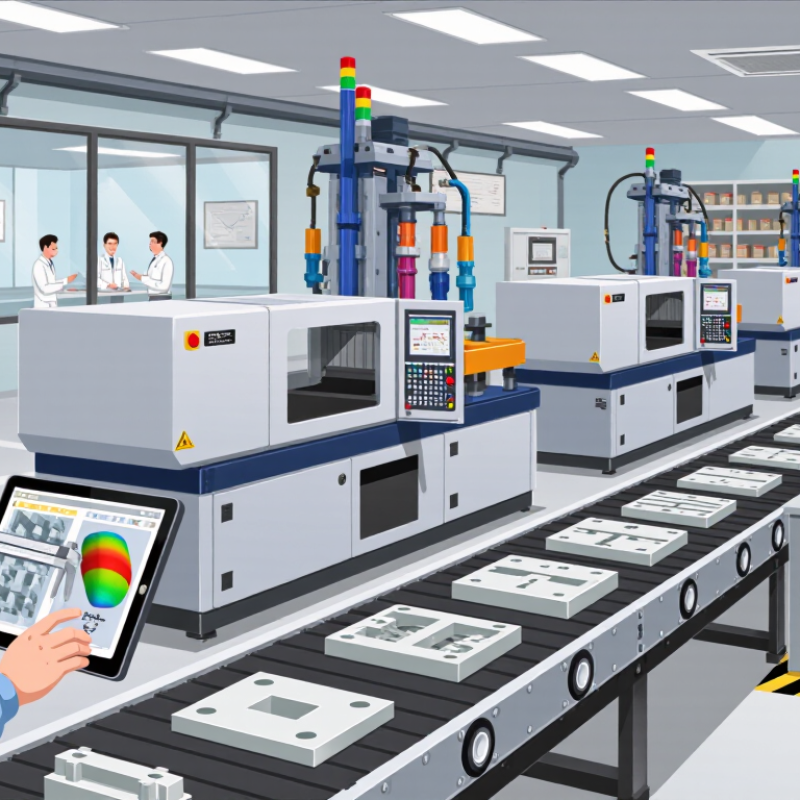
Technology also deserves close attention. Modern suppliers may use simulation software, automated inspection, digital production tracking, and energy-efficient equipment. However, technology cannot replace experienced engineers. Ask who reviews mold-flow results and who responds when warpage appears near a thin wall. Their answers reveal practical competence. Trust takes evidence.
Reliable communication is equally important. Confirm response times, engineering support, tooling ownership, maintenance plans, and backup capacity before signing an agreement. Review quality systems and relevant certifications carefully. Certification alone does not guarantee consistent parts. Visit the facility when possible, even if the first visit is virtual. Look beyond promises and examine records.
The strongest supplier is not always the cheapest. It may be the partner that identifies design risks early, explains trade-offs clearly, and documents every change. Still, no supplier is perfect. Forecasts shift, molds wear, and unexpected defects occur. A thoughtful selection process accepts these risks and measures how well a supplier manages them. This guide explains the practical questions, technical checks, and commercial signals that deserve attention before you commit.
Define Your Project Requirements and Supplier Expectations
How to Choose a Plastic Injection Molding Supplier in 2026?
Define Your Project Requirements and Supplier Expectations
Before requesting quotations, convert your product idea into measurable requirements. Specify the resin grade, annual volume, part weight, wall thickness, tolerances, surface finish, color, and packaging method. Include a 3D model, 2D drawing, and expected production schedule. A supplier cannot price uncertainty accurately. Neither can you.
Ask for design-for-manufacturing feedback before approving the mold. Request evidence of dimensional capability, material traceability, inspection equipment, maintenance records, and corrective-action procedures. The ISO Survey 2023 recorded 1,265,216 ISO 9001 certificates worldwide, but certification alone does not prove molding competence. Review recent inspection reports and sample parts. See the details.
Your expectations should cover response times, tooling ownership, engineering changes, minimum order quantities, and backup capacity. The 2024 State of Smart Manufacturing report found that 95% of manufacturers had invested, or planned to invest, in smart manufacturing. Ask whether the supplier uses digital production records, cavity monitoring, and real-time quality alerts.
Also test practical communication: send one complex drawing and measure the feedback. A polished presentation may hide weak process control. My own preference is a short pilot run, although it can delay launch and expose uncomfortable design flaws. Better early than expensive later.
Evaluate Manufacturing Capabilities, Technology, and Material Expertise
How to Choose a Plastic Injection Molding Supplier in 2026?
Manufacturing capability starts with evidence, not impressive machinery photographs. Ask for machine tonnage, shot capacity, mold dimensions, tolerance records, and recent process-capability data. A supplier should explain how it controls temperature, pressure, cooling, and cycle variation. For critical dimensions, request Cpk results, inspection methods, and sample reports. ISO’s 2023 Survey recorded 1,265,216 ISO 9001 certificates worldwide, but certification alone cannot prove molding competence. Audit the actual production floor.
Technology should solve production problems, not decorate a presentation. Look for scientific molding, mold-flow analysis, automated part inspection, real-time process monitoring, and documented mold maintenance. The International Federation of Robotics reported 4.28 million industrial robots operating globally in 2023. Automation can improve repeatability, yet poor programming still produces consistent defects. Ask how alarms trigger action, not merely whether sensors exist. A short video call cannot replace a site visit.
Material expertise deserves equal attention. The supplier should understand resin drying, melt temperature, shrinkage, warpage, glass-fiber orientation, and regrind limits. PlasticsEurope reported global plastics production of 413.8 million tonnes in 2023, increasing pressure for efficient material use. Request certificates of analysis, lot traceability, drying logs, and change-control records. Recycled content may reduce impact, but it can also alter viscosity and appearance. I would test those changes before approving production. Small oversights become expensive quickly.
How to Choose a Plastic Injection Molding Supplier in 2026?
Evaluate Manufacturing Capabilities, Technology, and Material Expertise
Material expertise is essential when selecting an injection molding supplier. The chart shows representative linear molding-shrinkage ranges for commonly used thermoplastics. A qualified supplier should validate the exact grade, mold design, cooling strategy, processing parameters, and tolerance requirements before production.
Compare Pricing, Lead Times, Communication, and Production Flexibility
Choosing a plastic injection molding supplier in 2026 requires more than comparing the lowest quotation.
Request a clear price breakdown covering tooling, resin, labor, inspection, packaging, and shipping. A cheap mold may create higher maintenance costs later. Ask for recent production examples, process controls, and measurement records. These details reveal practical experience better than polished sales claims.
Lead times should include design review, mold fabrication, sampling, revisions, and mass production.
Confirm the supplier’s monthly capacity and backup plans for machine maintenance or material delays. Communication matters just as much. A reliable team should answer technical questions clearly, share schedule updates, and document changes. One missed drawing revision can cause expensive rework. I have found that vague promises often sound attractive, but they rarely protect a project.
Tips:
Compare suppliers with the same part drawings and annual volume. Request a sample timeline with approval dates. Test communication before placing an order by sending three detailed questions. Also, discuss production flexibility. Can the supplier handle small pilot runs, color changes, engineering modifications, or sudden volume increases? Flexibility may cost slightly more, but it can prevent unused inventory. Still, do not assume flexibility means unlimited capacity. Ask for written limits, actual machine sizes, and realistic response times. A careful supplier will admit constraints instead of pretending every request is easy.
Assess Supplier Reliability Through Audits, Samples, and Reference Checks
Choosing a plastic injection molding supplier in 2026 requires more than a polished website. Reliability appears in repeatable work. During supplier evaluations, I inspect audit records, production controls, and corrective-action reports. A capable supplier should explain how resin lots, mold maintenance, and inspection results are recorded. Ask for recent evidence, not prepared promises. Vague answers signal avoidable risk.
Request samples made with the intended material, mold design, and production settings. A hand-finished sample can hide process variation. Compare several pieces, measure critical dimensions, and inspect weld lines, sink marks, flash, and surface texture. Ask whether samples came from normal production or a special trial. Reference checks should cover delivery consistency, defect communication, and response time after changes. One positive reference is not enough. Ask two or three customers uncomfortable questions.
Tips: Schedule a remote or onsite audit before approving tooling. Review calibration certificates, operator training, traceability, and capacity records. Request a small pilot run, then compare early parts with later pieces. Keep your own measurement log. I once treated a clean sample as proof of stable production. That assumption was too generous. Reliability must survive ordinary shifts, rushed orders, and minor machine problems. Leave room to reassess.